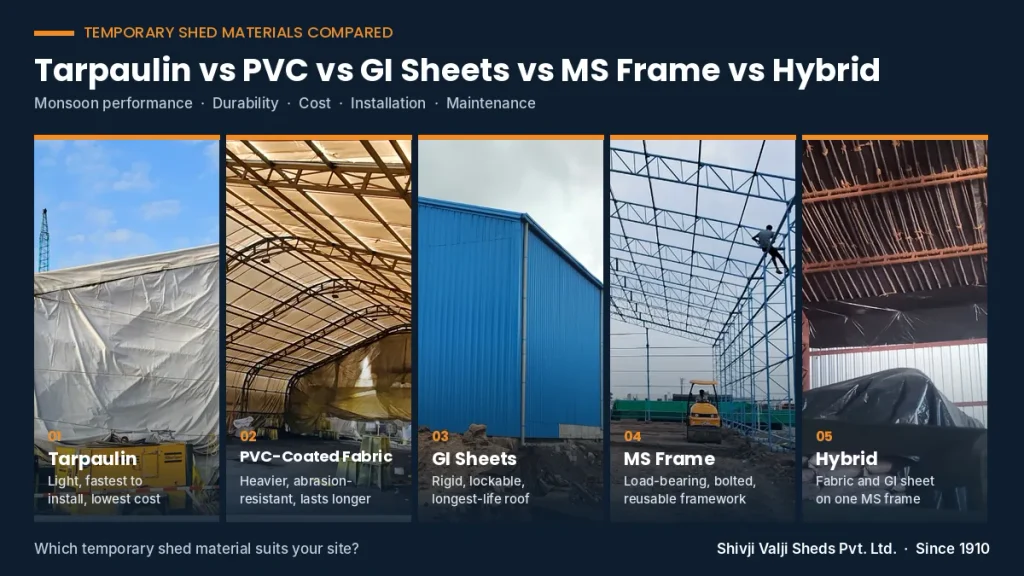
Temporary shed materials fall into 2 groups: coverings and frames. Tarpaulin, PVC-coated fabric and GI sheets form the roof and walls, an MS frame carries the load, and a hybrid shed combines rigid GI roofing with flexible fabric sides on one frame. This guide compares all 5 on weather resistance, monsoon performance, durability, cost, installation and maintenance, and matches each to construction sites, industrial storage, covered work areas and seasonal use. It ends with a 6-point checklist to confirm before you finalise your shed.
What Are the Different Materials Used in Temporary Sheds?
Temporary shed materials are chosen in 2 layers. The covering, tarpaulin, PVC-coated fabric or GI sheet, keeps out rain and sun, while the frame, usually mild steel (MS), with GI pipe or bamboo for lighter seasonal sheds, carries the load.
1. Tarpaulin Shed Covering
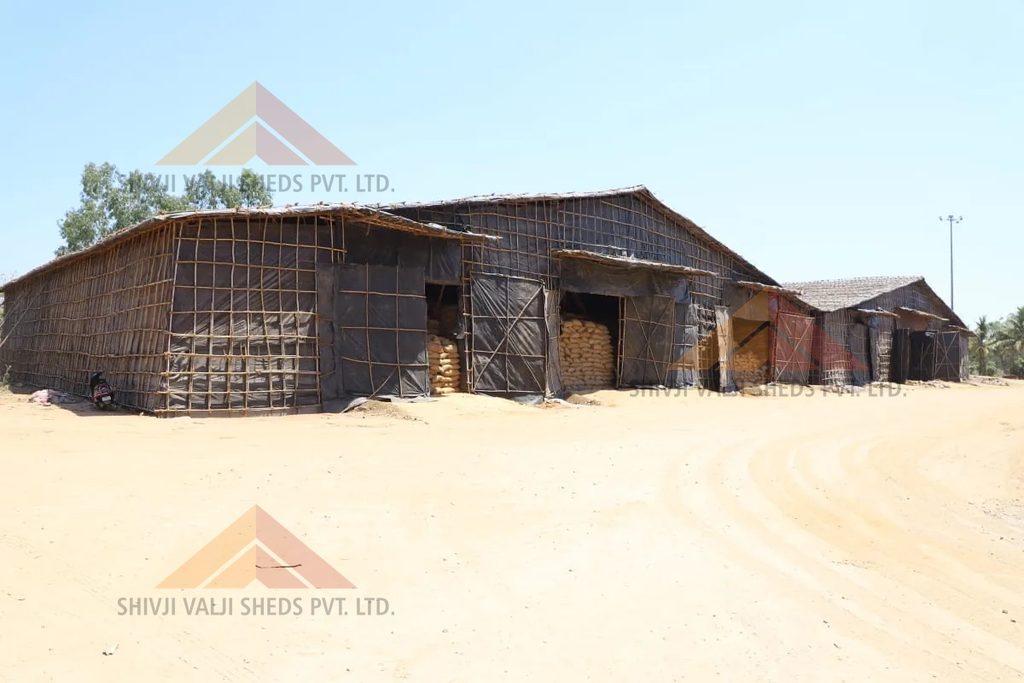
A tarpaulin shed, known on Indian sites as a tadpatri or tirpal shed, uses a flexible covering for quick installation and removal. HDPE-laminated tarpaulin is specified by GSM, with a higher GSM for longer exposure, and an LDPE liner beneath it adds a second barrier at joints and stitch lines. Reinforced edges and eyelets hold the sheet taut on the frame, and UV-stabilised grades suit sites with long sun exposure. Being light, it rolls up for storage and reuse, which suits short-term storage, site shelters and seasonal monsoon cover.
2. PVC-Coated Fabric Shed Covering
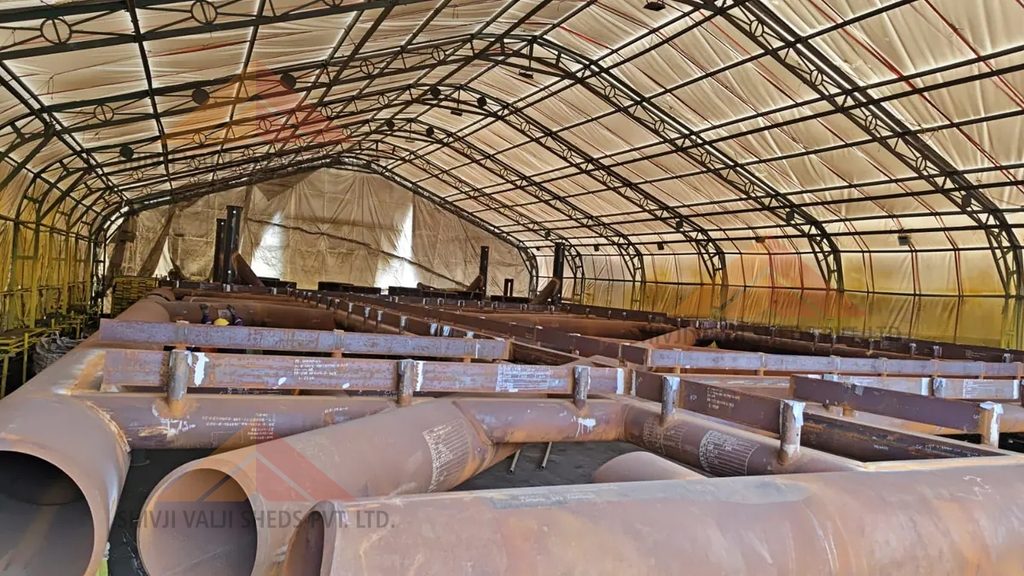
PVC-coated fabric consists of a textile base with a protective PVC layer. It is heavier and more abrasion-resistant than HDPE tarpaulin, and its performance depends on fabric weight, coating quality, seam strength and UV resistance. It suits covered work areas and storage that stay in place for longer spells or face higher wind loads.
3. GI Sheet Shed Covering
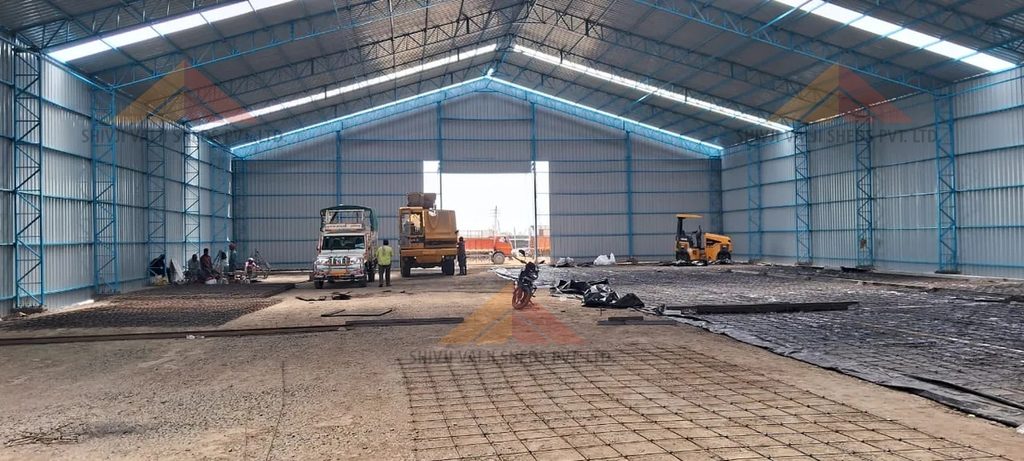
Galvanised iron (GI) sheets are steel sheets coated with zinc to resist corrosion. A GI sheet temporary shed gives a rigid roof and wall cladding, which suits enclosed storage for cement, machinery and goods that need a lockable, secure space. Sheet thickness, zinc coating quality, fasteners, overlaps and roof slope set its performance under heavy rainfall and humidity. Bolted GI sheets on an MS frame can be dismantled and re-fixed at the next site, so the enclosure moves with the project.
4. Mild Steel (MS) Frame
A mild steel (MS) frame forms the load-bearing framework of a shed, with members, joints and anchoring designed for the shed's size, covering weight and site wind loads. Bolted MS frames dismantle for reuse at the next site. For lighter, low-height seasonal sheds, GI pipe frames or bamboo framing are also used, with GI pipe favoured at coastal sites for its corrosion resistance.
5. Hybrid Temporary Shed Construction
Hybrid sheds combine materials in one structure, typically GI sheet roofing with PVC-coated fabric or tarpaulin sides on an MS frame. Each material sits where it works best: rigid cover overhead, flexible sides for access and airflow.
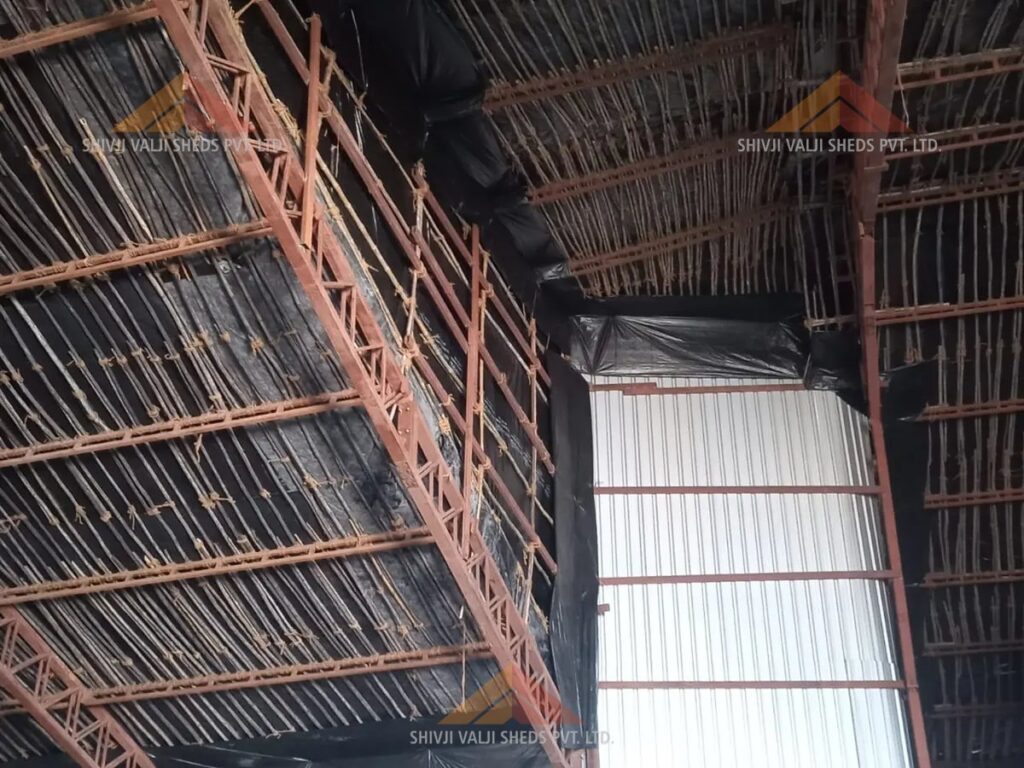
How Do Tarpaulin, PVC, GI Sheets, MS Frames and Hybrid Sheds Compare?
Tarpaulin is the lowest-cost covering and the fastest to install, PVC-coated fabric is heavier and more durable, and GI sheets give a rigid, long-life roof. The MS frame carries every covering, and a hybrid shed balances rigid roofing with flexible sides.
The following comparison highlights the practical differences between these options:
| Comparison Factor | Tarpaulin | PVC-Coated Fabric | GI Sheets | MS Frame | Hybrid Shed |
|---|---|---|---|---|---|
| Weather Resistance | Waterproof when HDPE-laminated and well tensioned; double layer for heavy monsoon | Highly water-resistant; welded seams suit long monsoon exposure | Rigid roof sheds heavy rain with correct slope and overlaps | Carries wind and rain loads for any covering | GI roof for rain, fabric sides for airflow |
| Durability | Covering replaced in cycles; higher GSM lasts longer | Heavier and more abrasion-resistant than HDPE tarpaulin | Long service life; zinc coating protects the steel | Reused across sites for years with corrosion protection | Rigid roof with replaceable side covers |
| Cost | Lowest initial cost | Higher than tarpaulin | Higher upfront; needs a stronger frame | Set by steel quantity, span and fabrication | Between a fabric shed and a full GI enclosure |
| Installation | Fastest; light and rolls up for reuse | Quick; needs tensioning and seam joining | Needs purlins, fasteners and a rigid frame | Bolted assembly with anchoring; dismantles for relocation | Combines frame, sheet and fabric fixing |
| Maintenance | Re-tension and check eyelets and edges after storms | Check seams, coating and fixings | Check fasteners, overlaps and cut edges for rust | Inspect bolts, joints and protective coating | Check roof sheets and side-cover fixings |
| Light and Ventilation | Translucent grades admit daylight; open sides aid airflow | Available in translucent and opaque grades | Opaque; add translucent sheets or ridge vents for light and air | Set by the covering chosen | Roll-up fabric sides add light and ventilation |
Technical distinction: An MS frame provides structural support, while a hybrid shed combines 2 or more materials on that frame. Tarpaulin vs PVC: HDPE-laminated tarpaulin is lighter and lower in cost for seasonal cover; PVC-coated fabric is heavier and longer-lasting for sheds that stay up longer or face higher wind.
| Choose The Right Materials For Your Temporary Shed Get your shed material recommendation |
Which Temporary Shed Material Is Suitable for Different Applications?
Match the material to the use: tarpaulin for seasonal and short-term cover, GI sheets for enclosed industrial storage, MS frames with fabric for open-sided work areas, and hybrid sheds where the roof and sides need different materials. Construction sites often use both.
1. Temporary Sheds for Construction Sites
A construction site temporary shed usually serves 2 needs at once. A GI sheet roof on an MS frame suits the cement godown and tool store, keeping bags on raised platforms and equipment secure, while tarpaulin sheds give quick cover for labour shelters, material yards and work zones. Choose by what is stored, the rain protection it needs and how often it is accessed, and plan for the shed to move as construction progresses.
2. Temporary Sheds for Industrial Storage
For industrial storage, the condition of the stored goods guides the choice of covering. GI sheet enclosures suit applications that need rigid roof and wall surfaces, while fabric-covered sheds suit goods that store well under a flexible enclosure. Assess moisture sensitivity, ventilation and handling needs before selecting the arrangement.
3. Temporary Sheds for Covered Work Areas
Work areas need headroom and clear space for people and equipment. An MS frame with tarpaulin or PVC-coated fabric suits open-sided work, and GI sheet sides suit work that needs full enclosure.
4. Temporary Sheds for Seasonal and Short-Term Requirements
For seasonal storage, monsoon cover or overflow space, speed of erection and removal matters most. Tarpaulin on a steel or bamboo frame goes up quickly at the start of the season and comes down once the stock moves out, which makes it the usual choice for a monsoon shed on hire. For sheds reused every season, store the covering dry and check the frame, fixings and eyelets before the next installation.
5. Hybrid Sheds for Applications Requiring Different Material Combinations
Choose a hybrid shed when the roof and sides need different materials, for example a rigid GI roof over fabric sides that open for loading access or ventilation.
What Should You Check Before Choosing a Temporary Shed?
Before choosing a temporary shed, confirm 6 points: site weather exposure, covered area and height, usage period, frame and anchoring design, roof drainage, and material specifications. These checks match the shed to your site as well as its covered area.
- Site conditions and local weather exposure: Check the site's exposure to strong winds, wind-driven rain and monsoon runoff. For coastal sites, assess corrosion exposure and specify suitable protection for exposed steel components and fasteners.
- Required covered area and shed height: Calculate the footprint needed for stored materials, machinery or workstations. Allow for vehicle turning space, loading access, door openings and the clearance needed to move goods freely past the frame and covering.
- Expected usage period and relocation needs: Establish how long the shed will stay in place and whether it will be reused at another location. Check that frame connections, covering fasteners and components dismantle, transport and reassemble cleanly.
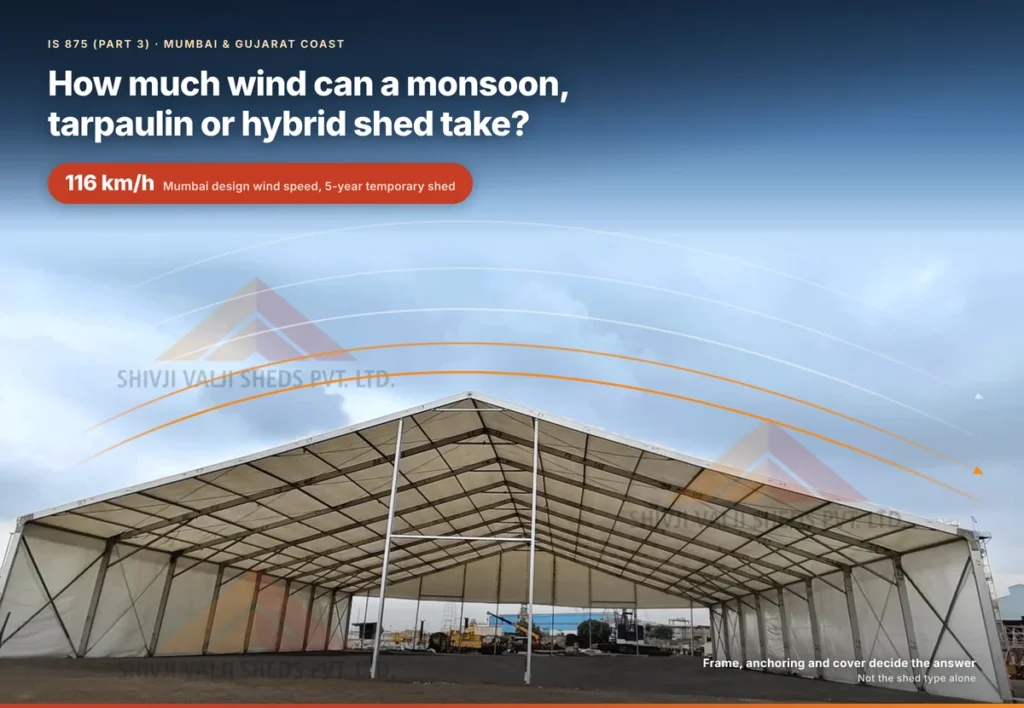
- Frame design, anchoring and structural stability: Confirm that the frame, joints and anchoring are designed for the shed's dimensions, covering weight and site-specific wind loads. Structural safety comes from this design check, whatever the sheet weight or frame size.
- Roof slope, drainage and water runoff: Check the roof slope, sheet overlaps, fabric tension and outlet locations, so rainwater runs off taut fabric and sealed joints and drains away from the shed's base.
- Material specifications, joints and installation quality: Verify the tarpaulin thickness and tear resistance, PVC fabric specifications, GI sheet thickness and coating, and MS section sizes. Inspect seams, fasteners, welded joints, and corrosion protection against the agreed specifications before accepting the installation.
Find the Right Temporary Shed for Your Site With Shivji Valji
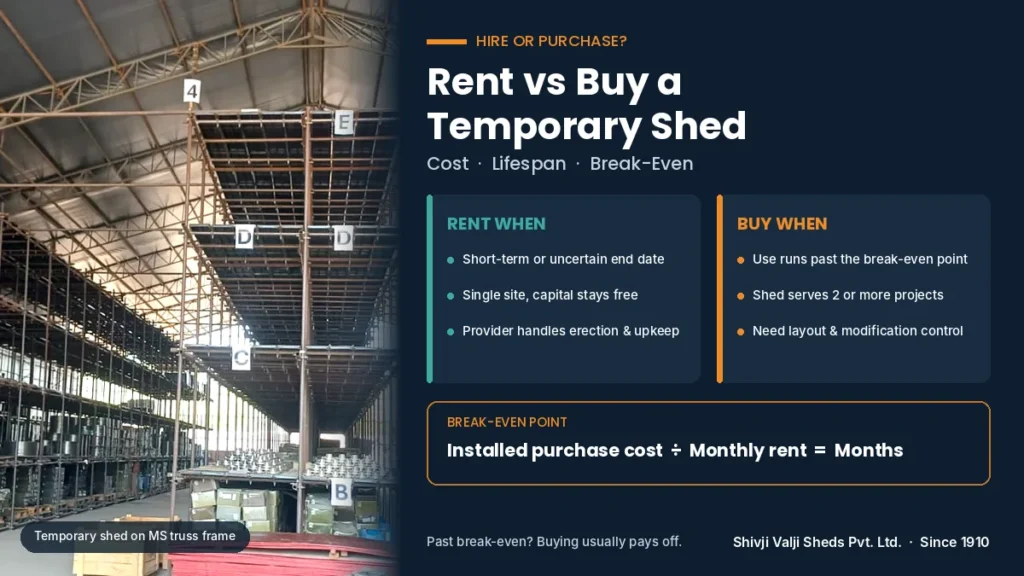
Shivji Valji Sheds Pvt. Ltd. has supplied and erected temporary sheds since 1910. As a contractor, supplier & erector, we offer tarpaulin, PVC, GI sheet, MS steel and hybrid sheds on hire or purchase, specified for your site and use.
Shed options available from Shivji Valji include:
- Tarpaulin, monsoon and PVC sheds: For seasonal covering and site protection, specified to the weather exposure.
- GI sheet and MS steel sheds: For applications requiring rigid roofing, steel framing, or a more enclosed structure.
- Hybrid sheds: For projects that need different materials for roofing and side coverings.
- Erection and dismantling: Support for setting up and removing sheds, with rental and purchase arrangements available for projects across India.
| Share your site location, use and duration. Request your temporary shed quote |
FAQs
1. Which temporary shed material is best for the monsoon?
GI sheet roofing on an MS frame gives the most rigid rain cover, while PVC-coated fabric suits long monsoon exposure with flexible walls. Double-layer HDPE-laminated tarpaulin with a correct roof slope suits seasonal monsoon sheds at a lower cost.
2. How long does each temporary shed material last?
An MS frame with corrosion protection is reused for years across sites, while coverings are replaced in cycles. PVC-coated fabric outlasts HDPE tarpaulin under the same exposure, and GI sheets last longest of the 3 coverings when overlaps and fasteners are maintained.
3. What affects the cost of temporary shed materials?
Cost depends on tarpaulin GSM, PVC fabric weight, GI sheet thickness and coating, the steel quantity in the frame, shed size, and hire or purchase terms. Hire rates by shed type and city are listed in our guide to temporary shed rental prices in India.
4. Can the same MS frame take tarpaulin, PVC or GI sheet covering?
Yes, an MS frame can carry any of the 3 coverings when its spacing, connections and anchoring suit the covering weight and site wind loads. Moving from fabric to GI sheets adds weight and fixing points, so have a competent engineer assess the frame before the change.
5. What information is needed to get a temporary shed quotation?
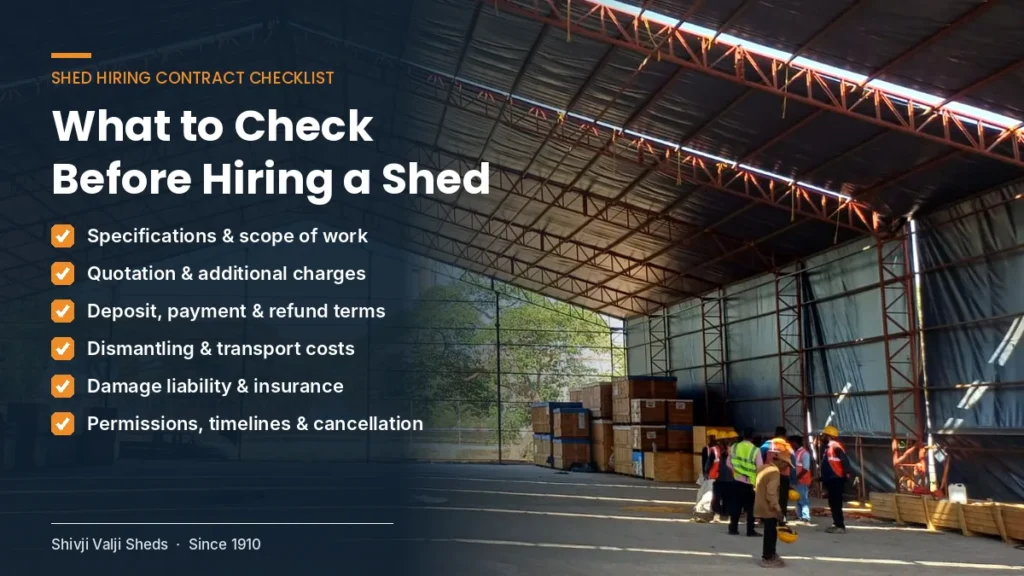
Share the site location, covered area, height, intended use and expected duration, plus your preferred covering and side enclosure. Mention whether the quote should include transportation, erection, dismantling or relocation.