Taking a temporary shed on hire works best when the contract covers more than the structure. Before you sign, confirm 10 points: provider experience, specifications and scope, quotation charges, deposit and refund terms, dismantling and transport costs, damage liability and insurance, permissions, installation timeline, maintenance and warranty, and extension and cancellation terms. This guide walks through each one, then gives you a quotation comparison method and a pre-signing checklist, so you know your total hiring cost and who is responsible at every stage, from erection to final handover.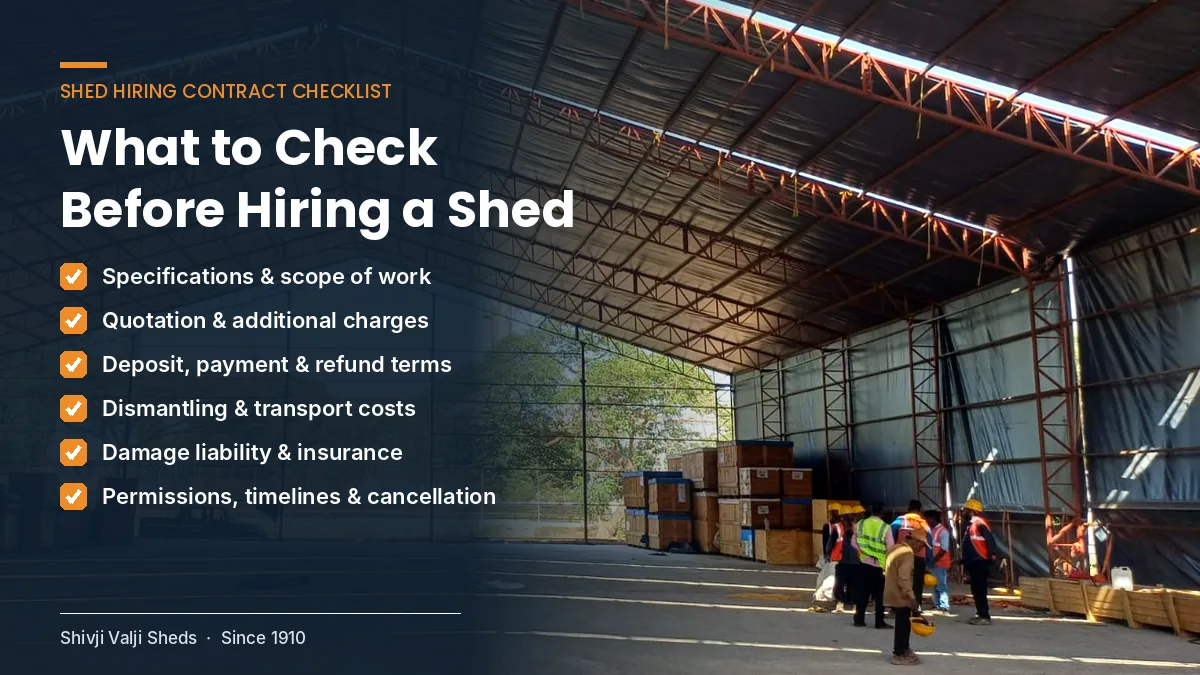
What Should You Check Before Hiring a Shed?
Check ten points before signing: provider experience, specifications and scope, quotation charges, deposit terms, dismantling costs, damage liability, permissions, installation timeline, maintenance and warranty, and extension or cancellation terms. Each one shapes your total hiring cost and decides who is responsible, from installation to final removal.
Key Takeaways
- Experience beats age. Choose a provider with comparable shed projects, not just long years in business.
- Compare the total cost. Match inclusions, removal charges and extension rates across quotations.
- Contract terms set your financial position. Check advance payment, security deposit, minimum hiring period and cancellation clauses.
- Every responsibility needs a named owner. Permissions, delays, repairs, damage and insurance each need a clear line in writing.
- Handover closes the arrangement. Dismantling, site handover and final settlement complete the hire.
1. Check the Shed Provider’s Experience and Previous Projects
Match the provider’s experience to your shed type. A shed for cement bags, a machinery shed and worker accommodation each need different materials and erection methods. Ask for examples of comparable installations, and record in the agreement who supplies the structure, who carries out erection and who fixes installation defects. That tells you exactly whom to contact if the finished shed differs from the agreed specification.
2. Verify Shed Specifications and Scope of Work
List the shed’s dimensions, clear height, frame material, roof covering, side cladding and anchoring arrangements. A quotation for a 1,000-square-foot shed, for example, may include the frame and roof but leave out side coverings, ground preparation or drainage. Compare tarpaulin sheds, hybrid sheds, PVC sheds, MS steel sheds, GI sheet sheds and PEB sheds against the specification in each quotation.
The scope should name every included component and service, plus exclusions such as foundations or electrical work. This keeps quotations comparable and removes guesswork about what the provider supplies.
3. Compare the Quotation and Identify Additional Charges
Two quotations for similar sheds can cover different services. One may include transportation, unloading and erection, while another charges for each separately. Equipment hire, applicable taxes and restricted site access can also change the final amount.
Compare quotations on the same specification, hiring period and service requirements. Ask for a cost breakdown that shows included services, additional charges and the cost of scope changes. Then compare the total for your planned period, including removal and any extension, not the monthly rate alone. That shows whether a lower quotation is a real saving.
Also Read: Temporary Shed Rental Price in India
4. Check the Deposit, Payment Schedule and Refund Conditions
Before paying, confirm the amount, due dates and return conditions. The agreement should separate an advance, which is adjusted against hiring charges, from a refundable security deposit held against damage or other agreed deductions.
Confirm when the deposit is refunded after the shed is returned, and ask for supporting details for any deduction. Record the payment milestones, accepted payment methods and the conditions for releasing the final payment.
5. Confirm Dismantling, Loading and Transportation Charges
Removal can include dismantling labour, equipment, loading and transportation. These are not always part of the hiring price, even when delivery and erection are covered. On a six-month construction project, separate removal charges can add a meaningful amount to the final cost.
Record who arranges and pays for each stage of removal. If you may move the shed to another site, confirm that relocation is permitted and how it is charged. Settling this before installation keeps the project close simple.
Planning a shed hire? Discuss your requirements with Shivji Valji.
6. Clarify Damage Liability and Insurance Responsibilities
Define who bears the cost if the shed or other property is damaged during the hire. Normal weather exposure, accidental impact, improper use and installation faults can each carry different responsibilities, so the contract should explain how the cause is assessed and who pays.
Check what the provider’s insurance protects. Cover for workers or third-party injury may not extend to the hired shed, stored materials or machinery on site. Confirm whether you need your own insurance for stored goods and site assets.
7. Confirm Who Arranges Permissions and Approvals
Responsibility depends on the shed’s location, intended use and local requirements. The customer may arrange site approvals, while the provider supplies technical specifications and drawings. The agreement should state who submits applications, supplies documents and pays fees, and what happens to the booking payment and installation schedule if an approval is delayed or refused. Get permissions confirmed in writing, even when the provider handles installation.
Also Read: Temporary Shed Permission in India
8. Agree on Installation Timelines and Delay Conditions
Confirm the delivery date, erection schedule and the date the shed is ready for use. Clarify when hiring charges begin, particularly if delivery and completed installation fall on different dates.
Agree how delays are handled. If the provider, equipment availability or an unready site holds up installation, the contract should explain how the schedule is revised and whether labour, equipment or waiting charges apply. Confirm every date change in writing.
9. Review Maintenance, Repairs and Warranty Terms
State who handles maintenance and repairs during the hire, and whether the cost sits within the agreed rate. A defective component and damage from misuse are treated differently, so the contract should explain how faults are assessed and who bears the expense.
If a warranty is offered, record its duration, covered components and exclusions, plus how faults are reported and repairs arranged. This turns a general assurance into a defined commitment.
10. Check Contract Duration, Extensions and Cancellation Conditions
Fix the hiring period, the date charges begin and the rate for extensions. If a construction project runs a month longer than planned, you need to know whether the extension needs prior approval and whether the original rate still applies.
Give cancellation terms equal attention: the minimum hiring period, notice requirements and cancellation charges. These set the financial outcome if you need the shed for less time than planned or the project is postponed.
Also Read: Rent vs Buy a Temporary Shed
What Should a Temporary Shed Hiring Agreement Record at Handover?
The agreement should record the shed’s condition at handover, acceptance of completed work, agreed changes, dispute-resolution steps and written confirmation that the hire has ended. Put verbal promises on paper too, so both parties share one clear record.
- Inspection and handover records: Condition of the shed at handover, acceptance of completed work and written confirmation when the hire ends.
- Delay, cancellation and dispute resolution: The process for missed deadlines, cancelled work and disagreements over obligations.
- Written confirmation of verbal assurances: If a provider promises a delivery date, price adjustment or extra service in discussion, request a revised quotation or written confirmation.
Shed Hiring Checklist: What to Confirm Before Signing
Use this checklist as a final review before signing. Each line maps to a step above, so you can spot gaps in scope, payment, removal, liability, permissions or exit terms in one pass.
- Shed dimensions, materials, covered area and agreed scope of work
- Provider responsibilities, erection arrangements and expected completion dates
- Deposit amount, payment milestones and refund conditions
- Dismantling, loading, transportation and relocation charges
- Damage liability, insurance coverage and repair responsibilities
- Applicable permissions, approval fees and who arranges them
- Maintenance requirements, warranty coverage and replacement conditions
- Contract extensions, cancellation terms, removal arrangements and final settlement
- All additional charges, verbal commitments and agreed changes recorded in writing
How Does Shivji Valji Support Shed Hiring From Site Assessment to Handover?
Shivji Valji is a contractor, supplier and erector of temporary sheds, established in 1910. Our team assesses your site, plans the structure, arranges erection and provides dismantling, so the scope of work is clear before you finalise your hire.
- One team across key stages: Site assessment, structure planning, supply and erection sit within one service scope, with in-house erection teams.
- Shed options for different needs: Tarpaulin, hybrid, PVC, MS steel, GI sheet and PEB structures cover different approaches to covered space.
- Rental as well as supply: Choose hire or supply based on your project duration and operational needs.
- Experience across industries: Over 100 years in the business, serving more than 20 industries.
- Projects across India: Pan-India reach for shed supply and erection at project and industrial sites.
Ready to hire? Contact Shivji Valji for your shed hire.
FAQs
1. What charges should a shed hiring quotation include?
A shed hiring quotation should show the hiring rate, transportation, unloading, erection, applicable taxes and any other included services. It should also list additional costs for equipment, site preparation, dismantling, loading and removal. Request a breakdown instead of a single total.
2. Who pays for dismantling and transportation of a temporary shed?
It depends on the hiring agreement. Some providers include dismantling and transportation in the quotation, while others charge for removal at the end of the hire. Confirm who arranges and pays for dismantling, loading and transport before signing, and clarify relocation charges separately.
3. Who is responsible for damage to a hired shed?
It depends on the cause of damage and the agreement. The hirer may be liable for misuse or mishandling, while defects or installation issues may fall to the provider. The agreement should explain how damage is assessed, who pays for repairs and whether costs can be deducted from the security deposit. Check insurance separately.
4. Who arranges permissions for a temporary shed?
It depends on the site, the intended use and local requirements. The customer may obtain site permissions, while the provider may supply drawings and specifications. Before installation, confirm who applies for approvals, pays the fees and provides the documents, and get it in writing.
5. Can you cancel a shed hire contract early?
It depends on the cancellation terms in your agreement. Check the minimum hiring period, notice requirement and cancellation charges before signing. These terms decide what you pay if the project is postponed or the shed is needed for less time.