Protecting cement, steel and machinery in monsoon comes down to three steps: dry raised storage, planned drainage and a temporary shed matched to your site. Cement bags stay fresh on raised pallets with first-in, first-out (FIFO) rotation. Steel sections and TMT bars stay ready to use on supports at least 150 mm above ground. Machinery stays service-ready with covered motors, closed electrical panels and steady airflow. A temporary shed for the monsoon season, such as a monsoon tarpaulin shed, hybrid shed or dome shed, keeps all three under one roof. This guide covers storage methods based on IS 4082, shed selection, site layout and a monsoon inspection checklist.
Key Takeaways
- Cement: raised pallets, 600 mm from walls, stacks up to 10 bags high, FIFO rotation
- Steel and TMT bars: 150 mm above ground, sorted by size, covered or coated for long storage
- Machinery: closed panels, covered motors, steady airflow and the manufacturer's storage guidance
- Shed choice: match shed type, roof covering, headroom, drainage and anchoring to your site
- Through the season: separate storage zones and a fixed inspection routine for roof, drains and frame
Why Do Cement, Steel and Machinery Need Monsoon Protection?
Each asset responds to rain in its own way. Cement reacts with moisture, so it needs dry air and a dry base. Steel needs dry surfaces to stay clean and ready for fabrication. Machinery needs dry electrical parts and steady airflow to stay service-ready.
A roof covers only part of the need. Moisture also reaches stored stock from wet ground, open sides and humid air. Floor level, drainage and airflow matter as much as overhead cover.
| Asset | What it needs in monsoon | How the shed delivers it |
|---|---|---|
| Cement | Dry air, a dry base and sealed bags | Closed sides, a raised platform and a FIFO stacking area |
| Steel and TMT bars | Dry surfaces and free drainage beneath stacks | Supports 150 mm above ground, a graded floor and side covers |
| Machinery | Dry electrical parts, airflow and service access | Headroom, ventilation and clear working space |
How Do You Store Cement in Monsoon Under a Temporary Shed?
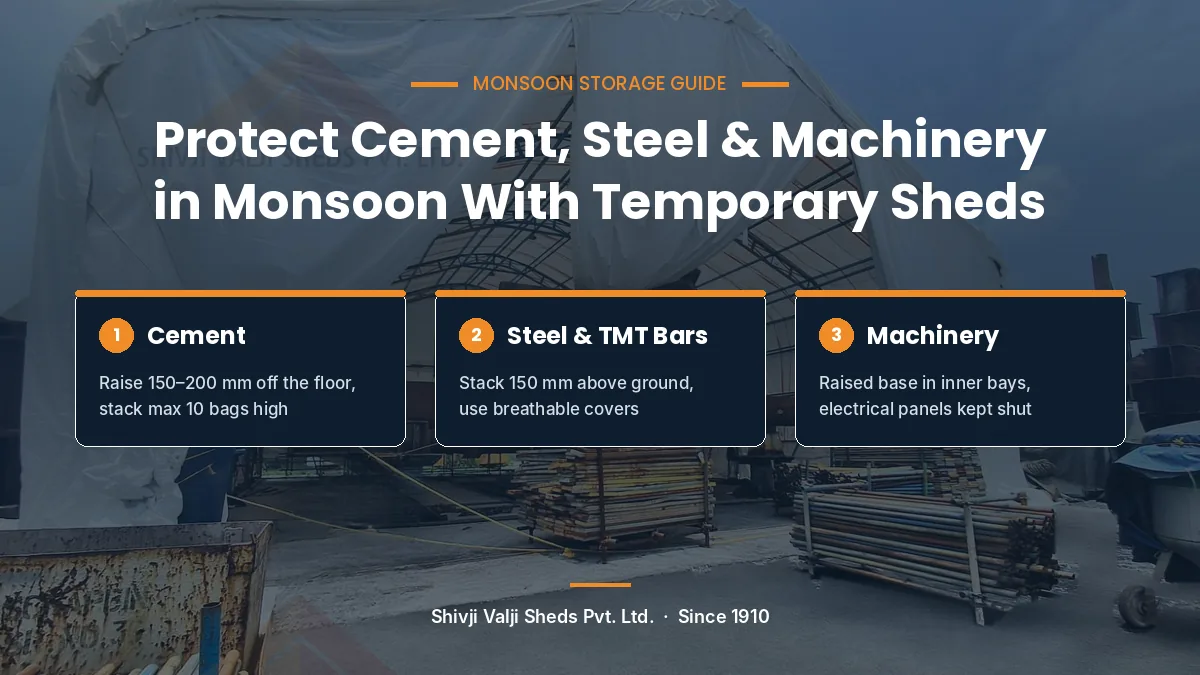
Store cement bags on planks or pallets 150–200 mm above the floor, at least 600 mm clear of the walls, in stacks up to 10 bags high. Keep the shed sides closed during rain, the bags sealed and the oldest stock moving out first.
Raise, Space and Size the Stacks
IS 4082:1996 is the Bureau of Indian Standards code for stacking and storing construction materials at site. It sets clear numbers for cement, and following them keeps the stack dry from below and stable under its own weight.
- Platform: wooden planks or dry pallets that hold bags 150–200 mm above the floor
- Wall clearance: at least 600 mm between the stacks and exterior walls or side covers
- Stack height: up to 10 bags, so the lower bags stay free-flowing
- Stack width: up to four bag lengths or 3 m, for easy access and air movement
- Location: the highest, driest part of the shed floor, with roof runoff directed away
How Do You Stop Cement From Forming Lumps in Monsoon?
Keep the air around the stacks dry, keep bags sealed, and hold stacks to 10 bags high. Cement forms lumps for two reasons: moisture from humid air or a damp floor, and pressure from tall stacks. IS 4082 sets the 10-bag limit to control pressure lumping.
Humid monsoon air reaches cement even under a sound roof. Keep side covers down during rain and roll them up for ventilation on dry days. For monsoon or extended storage, IS 4082 recommends an extra waterproof enclosure around the stacks. An LDPE sheet or tarpaulin wrapped over each stack is a practical way to provide it. Open bags only when the mix is ready, and set aside any bag with hard lumps for a quality test before use.
Rotate Stock by Date of Receipt
Use cement in the order it arrives. IS 4082 calls for a label showing the date of receipt on every stack, which makes FIFO rotation simple for the store team. Plan deliveries so stock is used within about 90 days, and test the strength of older cement before it goes into structural work.
How Do You Protect Steel and TMT Bars From Rust in Monsoon?
Stack steel sections and TMT bars at least 150 mm above ground on firm supports, sorted by size, with water draining freely beneath. For long storage or coastal sites, add a cement wash on bars or a primer coat on structural sections.
Stack Above Ground and Sort by Size
IS 4082 recommends storing reinforcement bars and structural steel at least 150 mm above ground on platforms, skids or timber supports. Keep each size, grade and length in its own stack, and colour-code the bar ends. Your site team then picks the right steel without shifting the whole pile.
- Grade the floor so runoff moves away from the steel bay
- Leave space between stacks for inspection and drainage
- Place the steel bay clear of roof discharge points and gutter outlets
How Do You Prevent Rust on TMT Bars Stored On Site?
Keep TMT bars dry from below and from the sides, and add a protective coat for long or coastal storage. Raised supports handle ground moisture, side covers handle wind-driven rain, and a cement wash or anti-corrosion coating protects the bar surface.
Open-sided sheds let wind-driven rain reach the outer stacks. Fit side covers on the windward face, and use breathable covers over steel so trapped humidity can escape. For coastal sites or storage beyond the monsoon, IS 4082 suggests a cement wash on reinforcement bars and a primer coat on structural sections. Check surfaces after every heavy spell and brush off light surface rust with a wire brush before fabrication.
How Do You Protect Machinery From Monsoon Damage?
Park machinery on a raised, firm base in the inner bays of the shed, keep electrical panels closed and motors covered, and allow steady airflow to keep condensation down. This blocks water ingress at the source. Follow the manufacturer's storage and restart instructions for each machine.
- Position: inner bays, away from open sides, roof discharge points and drainage channels
- Electrical parts: closed panels and covers rated for the equipment, with cables lifted off the floor
- Airflow: ventilation openings on the leeward side, so humid air moves out while rain stays out
- Access: a dry walkway and enough working space around each machine for routine checks
- Restart: the manufacturer's pre-start checks after heavy rain, especially for panels and connections
| Keep Your Cement, Steel and Machinery Dry This MonsoonPlan your monsoon shed today |
Which Temporary Shed Works Best for Monsoon Material Storage?
The best shed depends on what you store, the covered area, the headroom you need and how long you need cover. Tarpaulin sheds suit seasonal cement storage, hybrid and steel sheds suit heavier stock, and dome sheds suit machinery that needs clear, pillarless floor space.
| Shed type | Best fit for monsoon storage |
|---|---|
| Monsoon tarpaulin shed | Waterproof HDPE tarpaulin roof for seasonal cement and bagged material storage; quick to erect before the rains |
| Hybrid shed | Steel frame with a fabric roof; wider spans for steel stock and mixed storage |
| Dome shed | Clear, pillarless floor for machinery and bulk storage |
| MS steel shed | Longer storage periods and heavier loads |
| Warehouse storage shed | Rain shed for warehouse stock, through the full monsoon and beyond |
What to Confirm Before You Book a Monsoon Shed
- Covered area: floor space for each storage zone, plus aisles
- Headroom: an eave height that clears your tallest machine and forklift mast
- Roof covering: HDPE laminated tarpaulin with an LDPE liner, PVC coated fabric or GI profile sheet, chosen by rainfall and duration. Compare options in our guide to temporary shed covering materials
- Roof slope and gutters: a slope that sheds water fast, with outlets leading away from stock
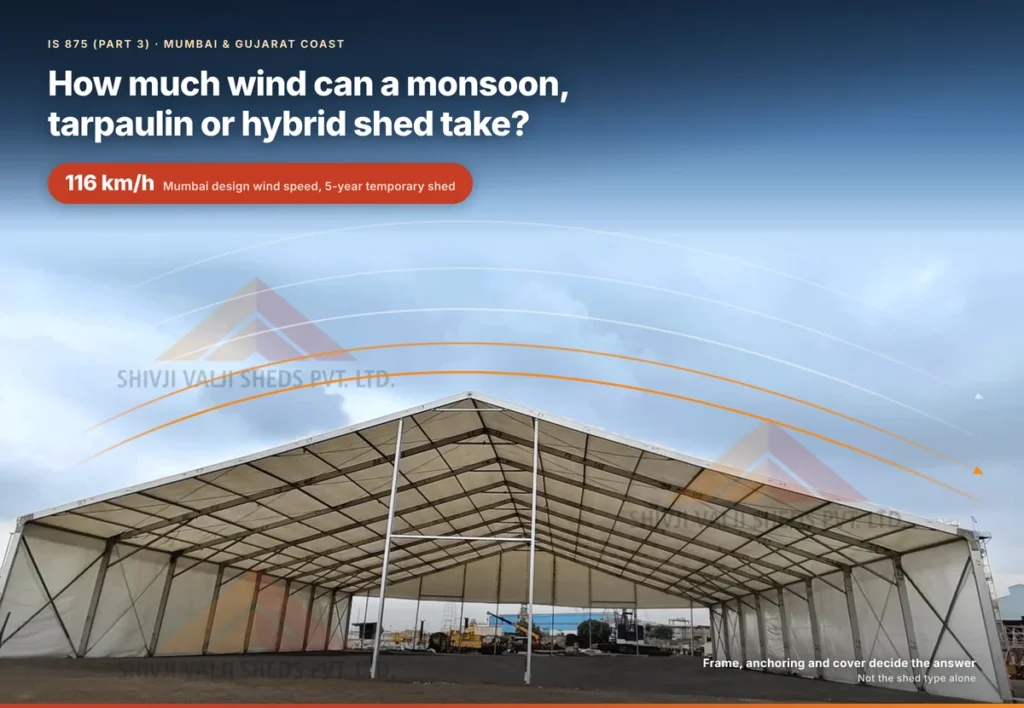
- Wind and anchoring: anchors matched to the ground condition and local wind exposure
- Hire period: from pre-monsoon erection to post-monsoon dismantling
How Should You Lay Out a Shared Monsoon Storage Shed?
Give cement, steel and machinery their own zones, with clear aisles between them. Place cement near the unloading point on the driest floor area, run steel along the length of the shed, and keep machinery near the entrance with full headroom.
- Cement zone: closest to unloading, on the highest floor level
- Steel zone: along the long side, for easy handling of long bars and sections
- Machinery zone: near the entrance, with headroom and turning space
- Aisles and edges: clear routes for forklifts and trolleys, and a free strip along gutters and drainage channels
What Are the Common Monsoon Storage Mistakes on Site?
The most common mistakes are stacking on bare floors, blocking drainage, parking machinery near open sides and leaving loose covers unchecked. Each one has a simple fix your site team can apply before the first heavy showers.
| Mistake | Quick fix |
|---|---|
| Cement bags stacked on a bare or damp floor | Planks or pallets holding bags 150–200 mm above the floor |
| Steel stacked on wet ground near roof outlets | Supports 150 mm above ground, placed clear of discharge points |
| Blocked gutters causing waterlogging around the shed | Gutters cleared before the monsoon and after every heavy spell |
| Machinery parked beside open sides | Inner bays, closed panels and covered motors |
| Loose tarpaulin and fasteners after strong winds | Re-tensioning and a fastener check after every storm |
What Should a Monsoon Shed Inspection Checklist Include?
Check the roof covering, drainage, frame and stored stock before the first heavy showers, after every storm or strong wind, and on a fixed routine through the season. Record each finding so repairs and stock checks happen on time.
| Area | What to check |
|---|---|
| Roof and covering | Seams, fabric edges, fixing points and even tension across the roof |
| Drainage | Gutters and outlets clear of silt and leaves; water moving away freely after rain |
| Frame and anchors | Frame alignment, fasteners and anchor points; any visible movement reviewed by a qualified engineer before use |
| Stored stock | Cement bags dry and free-flowing, steel surfaces clean, machinery enclosures dry |
Why Choose Shivji Valji for Monsoon Storage Sheds?
Shivji Valji Sheds Pvt. Ltd. has supplied and erected industrial sheds since 1910. Our team handles shed selection, supply or rental, erection and dismantling for construction, industrial and storage sites across India.
- 100+ years of site experience: sheds for construction, industrial, storage and commercial sites
- Full shed range: tarpaulin, monsoon, hybrid, dome, German hanger, MS steel, GI sheet and pre-engineered building sheds
- Supply and rental: hire for the monsoon season, or supply for longer requirements
- Erection and dismantling: trained supervisors and erection crews, with removal at the end of the hire period
- Pan-India execution: projects across states, coordinated from Mumbai
| Need a Temporary Shed for Monsoon Storage?Get a shed plan for your site |
Frequently Asked Questions
1. How long can cement be stored during monsoon?
Plan to use cement within about 90 days of receipt, on a first-in, first-out basis. Label each stack with its date of receipt, as IS 4082 recommends, and test the strength of older stock before structural use.
2. Is a tarpaulin shed waterproof and weatherproof in monsoon?
Yes. An HDPE tarpaulin shed with an LDPE liner beneath the main sheet gives a double waterproof layer. Leakage usually starts at joints, stitch lines and loose fixing points, so a correct roof slope, firm tensioning and clear gutters keep it dry through the season.
3. How do you prevent waterlogging around a temporary shed?
Keep the shed floor above the surrounding ground and slope it away from stored stock. Run gutters into drains that lead off the site, clear the outlets before the monsoon and after every heavy spell, and keep stock off the drainage edge.
4. Can I rent a temporary shed only for the monsoon season?
Yes. Temporary sheds are usually hired on a monthly or seasonal basis and charged per sq ft for the hire period. The supplier handles erection and dismantling, so the cover comes down once the rains end.
5. Do I need permission for a temporary shed on a construction site?
Rules vary by state and municipal body. Temporary structures generally fall under lighter provisions than permanent buildings, and many local bodies allow them for a set period on application. Read more on temporary shed permission in India.
References
- IS 4082:1996, Recommendations on Stacking and Storage of Construction Materials and Components at Site, Bureau of Indian Standards (clauses 4.2.2 for cement, 4.13 for steel)
- Equipment manufacturers' storage and restart instructions for each machine on site