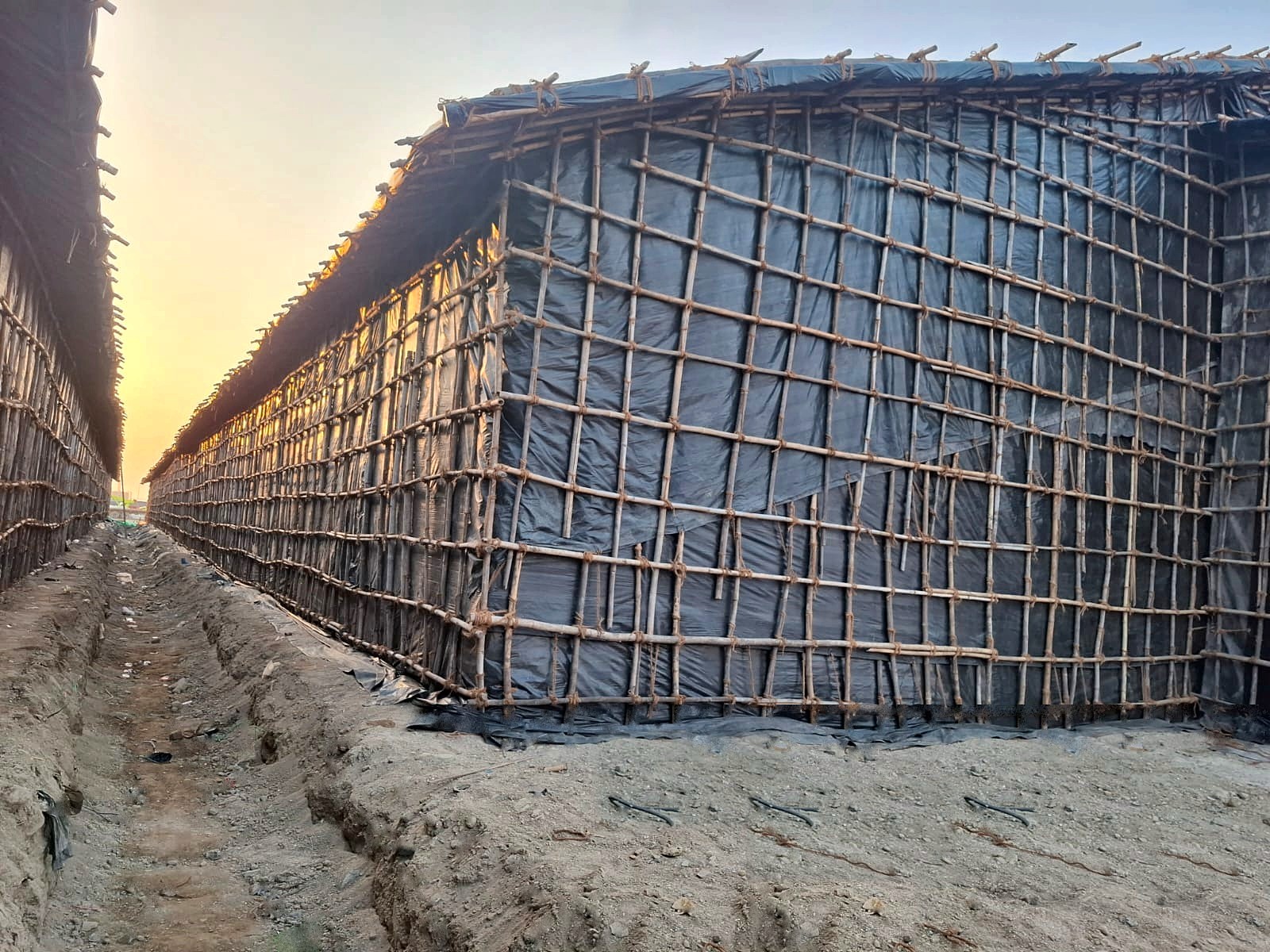
The choice between a temporary shed vs permanent shed comes down to three factors: foundation, relocation and ownership. A temporary shed uses a GI or MS pipe frame with HDPE or PVC tarpaulin, goes up in days to a few weeks, and is hired per sq ft for a season or project. A permanent shed, such as a pre-engineered building shed, stands on RCC footings with a steel frame, takes several months to build, and serves as an owned asset for decades. This guide compares both on materials, cost, lifespan, approvals and best-fit uses, so you can match the right structure to your site, budget and timeline.
What Is the Difference?
A temporary shed is a demountable structure raised on a light steel, GI or bamboo frame and covered with tarpaulin or profile sheet, erected without a permanent foundation and dismantled once the requirement ends. A permanent shed is a fixed structure built on RCC footings with a bolted or welded steel frame, intended to stay in place for the working life of the site.
The difference is not about strength. Both can be engineered to handle the same wind speed and rainfall. It sits in three places: whether the structure is anchored to a foundation, whether it can be taken down and re-erected somewhere else, and whether the buyer owns the asset or hires it for a fixed period. Every other difference follows from those three.
| Factor | Temporary Shed | Permanent Shed |
|---|---|---|
| Foundation | Ballast, ground anchors or shallow footings | RCC footings and plinth |
| Frame | GI pipe, MS pipe, MS trusses, bamboo bullies | Hot-rolled or built-up steel, RCC columns |
| Covering | HDPE or PVC tarpaulin, GI profile sheet | Colour-coated profile sheet, insulated panels |
| Installation time | Days to a few weeks | Several months |
| Relocation | Dismantled and re-erected at another site | Not relocatable |
| Commercial model | Usually on hire or rental, monthly or seasonal | Owned capital asset |
| Approvals | Light; treated as a temporary structure in most local rules | Building plan approval, occupancy and statutory clearances |
| Cost structure | Operating expense, charged per sq ft per period | Capital expenditure, depreciated over years |
| Lifespan | Frame reused for years; covering replaced in cycles | Decades with routine maintenance |
| Best suited to | Seasonal, project-linked or uncertain-tenure needs | Permanent production or long-term warehousing |
What Materials Are Used in Temporary and Permanent Sheds?
Material choice is the clearest technical divide between the two. A temporary shed is built from components that can be unbolted, rolled up and carted to the next site. A permanent shed is built from components that are cut, welded and cast into position.
Temporary Shed Materials:
Indian suppliers work with a fairly settled set of materials, chosen for monsoon performance, reuse value and speed of erection.
- HDPE laminated tarpaulin: high-density polyethylene woven fabric, laminated on both faces, used as the main waterproof covering and specified by GSM
- PVC coated fabric: a heavier, more abrasion-resistant covering used where the shed must stand for longer spells or carry higher wind load
- LDPE liner: a low-density polyethylene sheet laid under the main tarpaulin as a second barrier against seepage at joints and stitch lines
- GI pipe: galvanised iron pipe used for the frame, favoured for corrosion resistance in coastal and high-humidity locations
- MS pipes and trusses: mild steel members used for wider spans, dome-type and pillarless structures where clear floor area matters
- Bamboo bullies and coir rope: traditional framing still used for low-height seasonal sheds and short-duration monsoon cover in many parts of the country
- GI profile sheets: corrugated galvanised sheet used as roofing where a harder surface is needed than fabric can give
Fabric and frame are usually paired to the duration of the requirement. Read more on monsoon and tarpaulin sheds and on hybrid sheds that combine a steel frame with a fabric roof.
Permanent Shed Materials:
- RCC foundation and flooring: reinforced cement concrete footings, plinth beams and floor slab designed for the load of stored goods or machinery
- Structural steel framing: hot-rolled or built-up sections forming columns and rafters, typically supplied as a pre-engineered building system
- Colour-coated profile sheet: pre-painted galvalume or galvanised sheet for roof and side cladding, with a longer coating life than plain GI
- Insulated panels: PUF or rock wool sandwich panels used where temperature control or fire rating is part of the brief
- Masonry side walls: brick or block walls raised to sill or full height, common in Indian factory sheds for security and dust control
For long-term structures, see pre-engineered building sheds and MS steel sheds.
Cost Difference Between a Temporary Shed and a Permanent Shed
The two are not really comparable on a single price figure, because they sit on different sides of the balance sheet. A temporary shed is generally taken on hire and charged per square foot for a defined period, which keeps it in the operating budget. A permanent shed is a capital asset with land, design, statutory approval, civil work and long-term maintenance attached to it. The right comparison is total cost for the period the cover is actually needed.
| Cost head | Temporary Shed | Permanent Shed |
|---|---|---|
| Upfront outlay | Low; often a deposit and first period charge | High; full project cost before use |
| Basis of pricing | Per sq ft per month or per season | Per sq ft of built-up area, one time |
| Civil work | Minimal or none | Foundation, flooring, drainage, approach |
| Approval and compliance cost | Low | Plan sanction, NOCs, professional fees |
| Maintenance | Usually included in the hire contract | Owner’s responsibility for the life of the building |
| Exit cost | Dismantling and removal by the supplier | Asset stays; resale or disposal only |
| Cost when the need ends | Charges stop | Cost continues as depreciation and upkeep |
Within the temporary category, the quotation moves on span and eave height, fabric GSM and type, whether the frame is GI pipe or MS truss, the duration of hire, site access and ground condition, and whether dismantling is priced in. Specific rates depend on all of these and are quoted against a site drawing rather than a rate card.
| Not sure which one your site actually needs?Contact us for Free Consultation at 9930924189 |
Lifespan: How Long Does Each Type of Shed Last?
A temporary shed does not age as one unit. The frame and the covering wear out on completely different timelines, and the whole structure is designed around that fact. Steel pipe and truss members are cleaned, straightened and redeployed across many sites over many years. The tarpaulin is the consumable: ultraviolet exposure, wind flutter and repeated folding are what end its service life, so it is replaced in cycles while the frame carries on.
A permanent shed ages as a single asset. Its life is measured in decades and is governed by the condition of the foundation, the corrosion protection on the steel and the coating life of the roof sheet. It does not get replaced in parts; it gets maintained, repainted and eventually retrofitted.
- What shortens a temporary shed’s life: low-GSM fabric, coastal salt exposure, poor tensioning that allows the sheet to flap, and repeated erection at rough sites
- What extends it: correct fabric grade for the duration, galvanised framing, planned re-tensioning during the season, and supplier-side maintenance under the hire contract
- What governs a permanent shed’s life: foundation design against actual soil condition, galvanising or paint system on the steel, and roof sheet coating class
Framed simply: a temporary shed is built to be maintained and reused; a permanent shed is built to be maintained and kept.
When Should You Choose a Temporary Shed Over a Permanent Shed?
The decision usually turns on tenure and certainty rather than on budget alone. Where the requirement has an end date, or where the land does not belong to the user, a temporary structure is normally the sounder commercial choice.
- Leased or shared land: no case for sinking capital into a structure that cannot be taken with you when the lease ends
- Seasonal storage peaks: harvest arrivals, festive stock build-up and pre-monsoon cover need capacity for a few months, not permanently
- Shutdowns and turnarounds: dismantled equipment, spares and contractor material need protected space only for the duration of the outage
- Project and construction sites: cement, steel and finishing material need cover that moves as the project moves
- Bridging a capacity gap: cover for the months between an order surge and the handover of a permanent building
A permanent shed makes better sense where the operation is fixed on owned land, where machinery has to be foundation-mounted, where temperature or fire ratings are non-negotiable, or where the building itself is meant to hold value on the books. Many sites end up running both: a permanent production block alongside a temporary warehouse shed that flexes with demand.
Why Choose Shivji Valji Sheds Pvt. Ltd.
- Over a century in the trade: more than 100 years of supplying and erecting industrial sheds, with the site experience that comes with it
- Supply and rental under one roof: sheds available on hire for seasonal needs and on supply terms for longer requirements
- Full range of structures: tarpaulin, monsoon, hybrid, dome, German hanger, MS steel, GI sheet and pre-engineered building sheds
- Erection and dismantling handled: trained supervisors and erection crews, with removal at the end of the hire period
- Pan-India execution: projects handled across states, coordinated from Mumbai
FAQs:
1. Is a temporary shed the same as a monsoon shed?
A monsoon shed is one type of temporary shed. The term refers to a seasonal structure put up specifically to keep rain off stored material, usually with a two-side slope and a double layer of laminated tarpaulin. Other temporary sheds, such as warehouse and project sheds, are used all year round.
2. What kind of temporary shed materials are used in India?
The common ones are HDPE laminated tarpaulin and PVC coated fabric for the covering, LDPE liner as a secondary waterproof layer, GI pipe and MS pipe or truss for the frame, GI profile sheet where a rigid roof is needed, and bamboo bullies with coir rope for lighter seasonal structures. The combination is chosen by span, duration and how much rain the site takes.
3. Does a temporary shed need building approval in India?
Requirements vary by state and municipal body. Temporary structures are generally dealt with under separate and lighter provisions than permanent buildings, and many local rules allow them for a limited period on application. Permanent sheds need full plan sanction. Check with the local authority for your plot before you commit either way.
4. Can a temporary shed be converted into a permanent shed later?
Not directly. The two are engineered differently from the foundation upward, so a temporary structure cannot simply be upgraded in place. What is common in practice is to run a temporary shed while the permanent building is designed, sanctioned and constructed, then dismantle it once the permanent structure is in use.
5. Is hiring a temporary shed cheaper than building a permanent one?
Over a short period, almost always, because there is no land, foundation or approval cost and the charge stops when the shed comes down. Over a long horizon on owned land the position reverses, as accumulated hire charges pass what a permanent structure would have cost. The break-even depends on area, duration and location, which is why the two should be compared over the period cover is actually required.